Echoes of Empire
How Western media recycle colonial myths about Africa
Five million people died in the Second Congo War. The West barely noticed. This book explains why — by tracing, article by article, the nineteenth-century script that still runs quietly beneath twenty-first-century reporting.
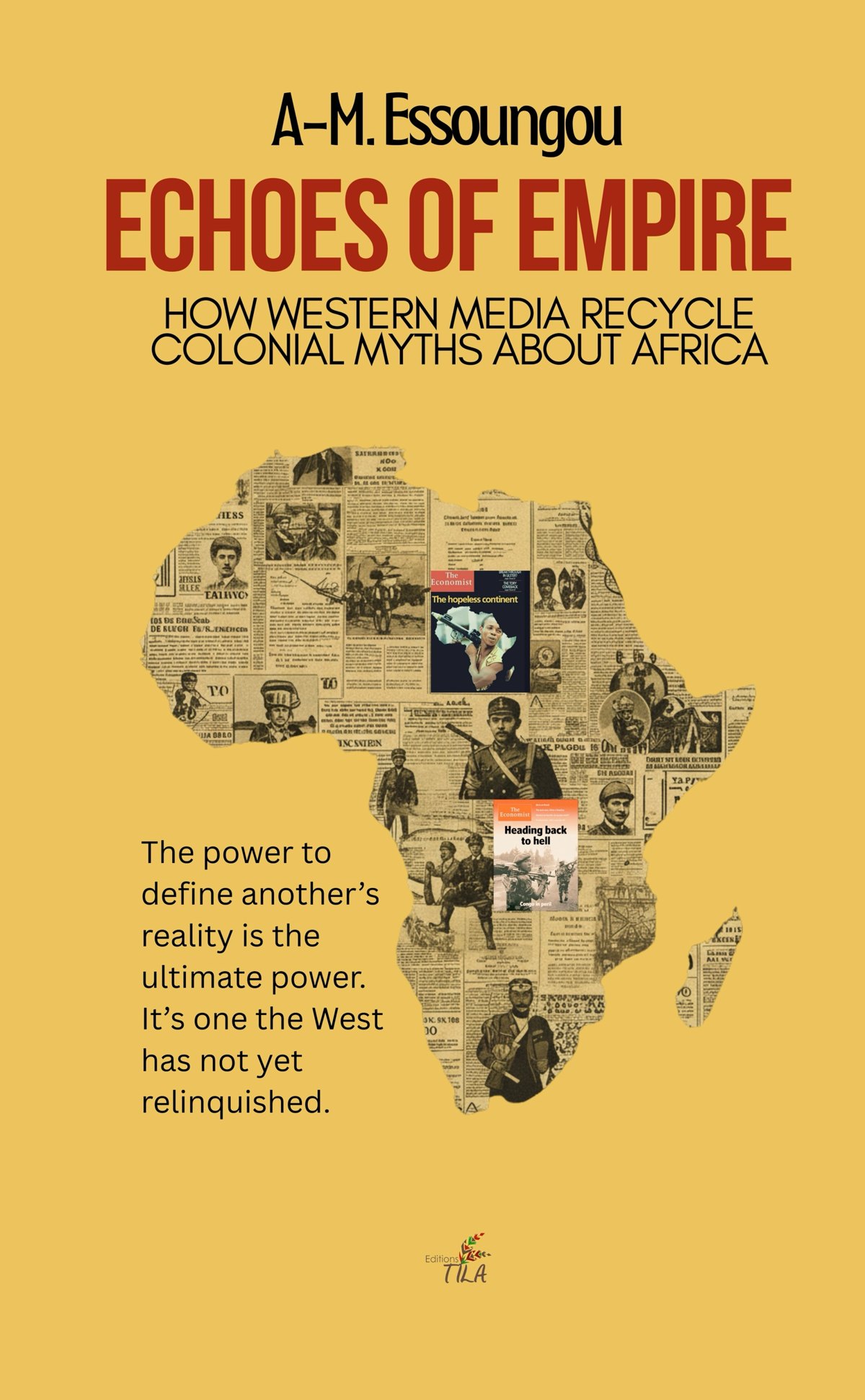
The power to define another's reality is the ultimate power. It is one the West has not yet relinquished.
Between August 1998 and July 2003, the Second Congo War killed more people than any conflict since 1945. Over the same five years, two of the West's most respected magazines published a few dozen articles about it — and told, almost without variation, the same story: a land that erupts, a people who cannot be reasoned with, a West that must eventually step in.
This book is a close reading of those articles, and of the century of writing that made them feel natural.
Four frames, one inherited script
The book identifies four narrative frames that recur across the coverage. Together they form what it calls the colonial playbook — a way of writing about Africa that survived the empires that invented it.
Naturalisation
A political war becomes a geological event. It “erupts”, it is a “descent into hell”, a “deluge of blood”. Causes, actors and interests disappear into the weather.
The savage
Leaders are reduced to “village chiefs”, armies to “tribes”. The word tribal arrives precisely where political analysis should be, and does its work by seeming to explain.
The rescuer
African peace initiatives — Lusaka, Sun City — are written off in advance. Western intervention becomes the only rational horizon, and the former coloniser the reluctant hero.
The silence
A continent of 1.4 billion people becomes a backdrop. African actors are rarely quoted, and when they are, it is to supply despair or to validate a conclusion already reached.
A hub, not a shop window
Everything behind the book is here and open: the research it grew from, the corpus it analyses, a ready-made syllabus, and a podcast that covers the argument in under an hour.
The book
Chapter summaries, an extract, all editions — and the full PDF, free.
Read → 02Unframing Africa
Ten short episodes, one per stage of the argument. Listen in the browser.
Listen → 03Method & sources
The 2009 Geneva master's thesis, the corpus, the coding frame — reproducible.
Study → 04Teaching
A twelve-session master's seminar and a practical course for working writers.
Teach → 05Beyond the book
The journalists, publications, films and archives doing this differently.
Explore → 06The author
Twelve years a foreign correspondent, a decade advising the UN on the Great Lakes.
Meet →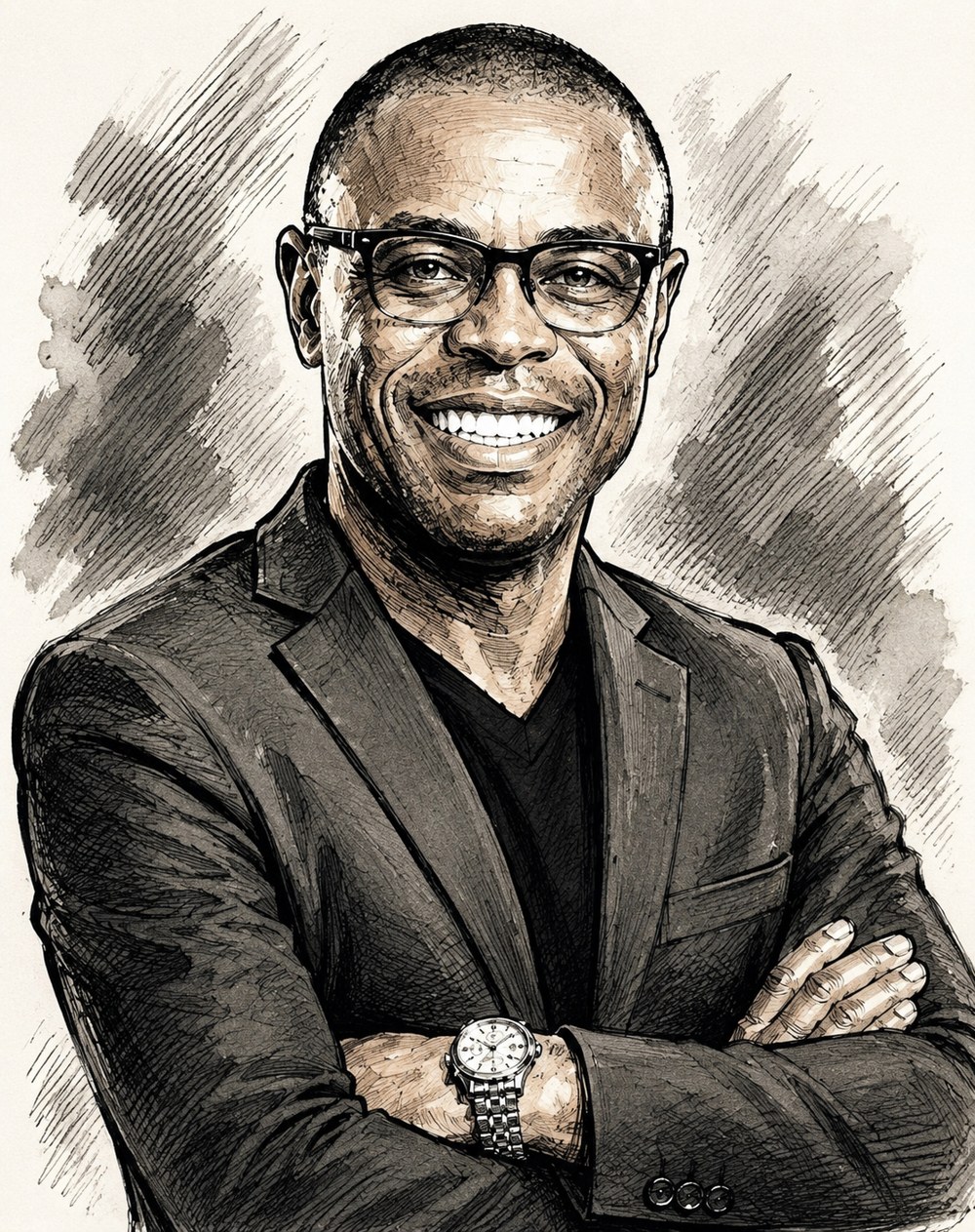
Twelve years inside the machine
Foreign correspondent for the BBC World Service and Radio France Internationale, posted in Uganda and Tanzania during the years this book examines. Then more than a decade as a political adviser at the United Nations — first on the DR Congo and the Great Lakes, later on Mali and the Sahel.
“For more than a decade I lived inside that system. It was an extraordinary vantage point. And yet, from very early on, I sensed that something about the way the world was being described did not entirely match the world I knew.”
There is a particular kind of story the West tells about itself. It is a story of progress, of reason, of the slow, messy, but ultimately forward march of history. When Western nations go to war, the reporting is framed within this story. Western conflicts, however brutal, are imbued with meaning. Western leaders, even the ones most despised, are treated as rational actors, playing a high-stakes game of geopolitical chess.
The Savage Frame is the inverse of this story. It is a narrative machine designed to take a conflict and strip it of all political meaning.
Chapter 3 — From Conrad to The Economist
Teach it, cite it, argue with it
The thesis, the bibliography, the full list of analysed articles and a twelve-week syllabus are all downloadable. Use them, adapt them, disagree with them in print.